Biodiversity Conservation: Why Nature Cannot Be Reduced to a Price
Explore biodiversity, ecosystem services, habitat connections and conservation trade-offs, with a balanced framework for UPSC environment answers.
GS III: Environment, conservation, resources and sustainable development; GS II: Governance

A forest can be described as timber, a watershed, a habitat or a place of cultural belonging. None of those descriptions is necessarily wrong, but each makes different things visible. Biodiversity policy becomes weak when one description crowds out all the others. The challenge is to explain why living systems matter to everyday life without implying that a species deserves protection only when somebody can calculate its commercial value.
Explore this article Sections & revision ↓
Biodiversity is more than a species count
Biodiversity includes variation within species, between species and across ecosystems. Counting visible animals captures only part of that picture. Genetic diversity can influence the ability of a population to respond to changing conditions, while ecological relationships determine how organisms interact. A landscape with many planted trees may therefore differ fundamentally from a functioning native habitat even when both appear green in a distant image.
This matters for evaluation. A programme judged only by the number of saplings planted can miss survival, species suitability and habitat quality. Similarly, a protected boundary does not by itself demonstrate that ecological processes remain intact. Conservation requires attention to condition and relationships, not merely area or attractive flagship species. The less visible parts of an ecosystem can be essential to its continued functioning.
Ecosystem services make dependence easier to see
The ecosystem-services approach draws attention to benefits people obtain from nature, including pollination, water regulation and cultural value. The Convention on Biological Diversity’s global framework explicitly connects conservation with maintaining nature’s contributions to people.[1] This can improve public decisions by showing that destroying a habitat may also undermine agriculture, settlement safety or water availability beyond the project site.
Yet the framework should be used as an aid to understanding rather than a complete moral account. Some benefits are difficult to measure, arrive over long periods or matter to groups with little purchasing power. A service with no market price is not necessarily worthless. Conversely, attaching a monetary estimate does not automatically make conservation the preferred option if decision-makers ignore who receives the benefit.
Avoid the trap of easy substitution
A natural system is not always replaceable by a constructed equivalent. A treatment facility may perform one water-related function without reproducing habitat, cultural or landscape values. This does not mean engineered infrastructure is undesirable. It means comparisons should specify what is actually being replaced and what remains lost. The phrase 'compensation' can conceal very different ecological outcomes if those distinctions are not stated.
Consider a hypothetical proposal to clear a mature habitat and plant trees elsewhere. The new planting may have value, but it cannot instantly recreate the original system’s age, relationships and location. Distance also matters to the communities using the original landscape. A credible assessment should examine avoidable damage first, then minimisation and restoration, before treating an offset as if it eliminated every outstanding loss.
Connectivity changes what protection can achieve
Species and ecological processes do not necessarily remain inside a protected area. Movement may be needed for feeding, breeding or adjustment to changing conditions. A protected patch surrounded by incompatible land uses can consequently become isolated. The CBD’s Target 3 combines area conservation with ecological representation, connectivity and equitable governance.[2] The target is richer than the shorthand of protecting a percentage of territory.
Connectivity planning needs careful local interpretation. A corridor drawn on a map may overlap settlements, farms or infrastructure that people depend on. Protection must therefore involve negotiation, credible information and workable arrangements rather than simply prohibiting activity. The goal is to maintain important ecological movement while addressing real human costs. A connection that exists only in a planning document provides little practical conservation benefit.
Conservation decisions have distributional consequences
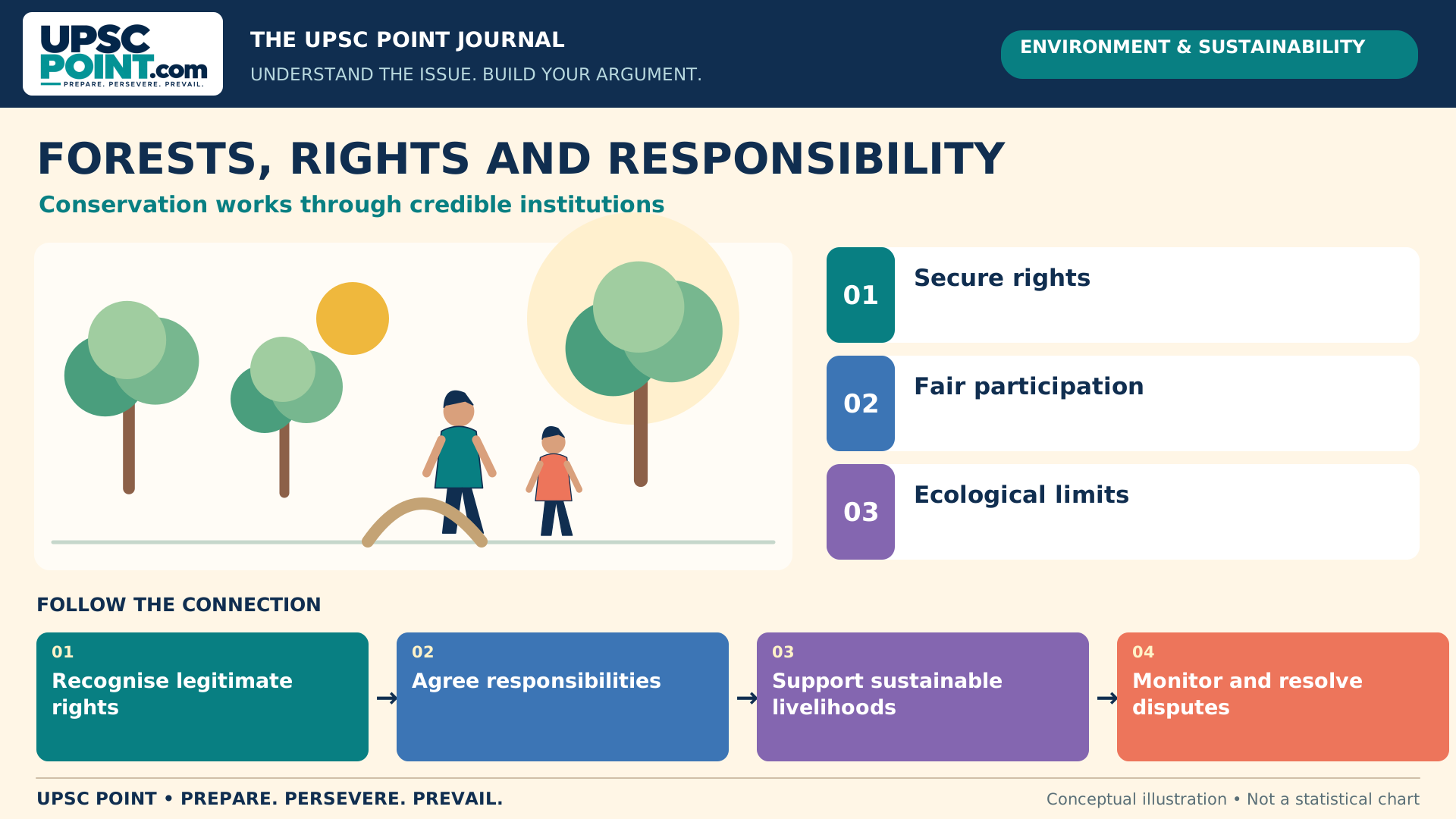
The benefits of biodiversity can extend widely, while restrictions fall heavily on nearby residents. A household may lose access to a resource even as distant visitors enjoy a protected landscape. This does not invalidate conservation, but it creates an obligation to examine burdens honestly. Participation is more than announcing a completed decision and inviting people to agree with it after alternatives have disappeared.
A fair process asks whose knowledge is considered, who can challenge evidence and how benefits are shared. It must also recognise disagreement within communities rather than assuming one representative speaks for everyone. People may differ by occupation, gender, land access and dependence on seasonal resources. Conservation becomes more durable when it understands those differences and provides credible remedies instead of relying entirely on enforcement.
Restoration needs an ecological reference
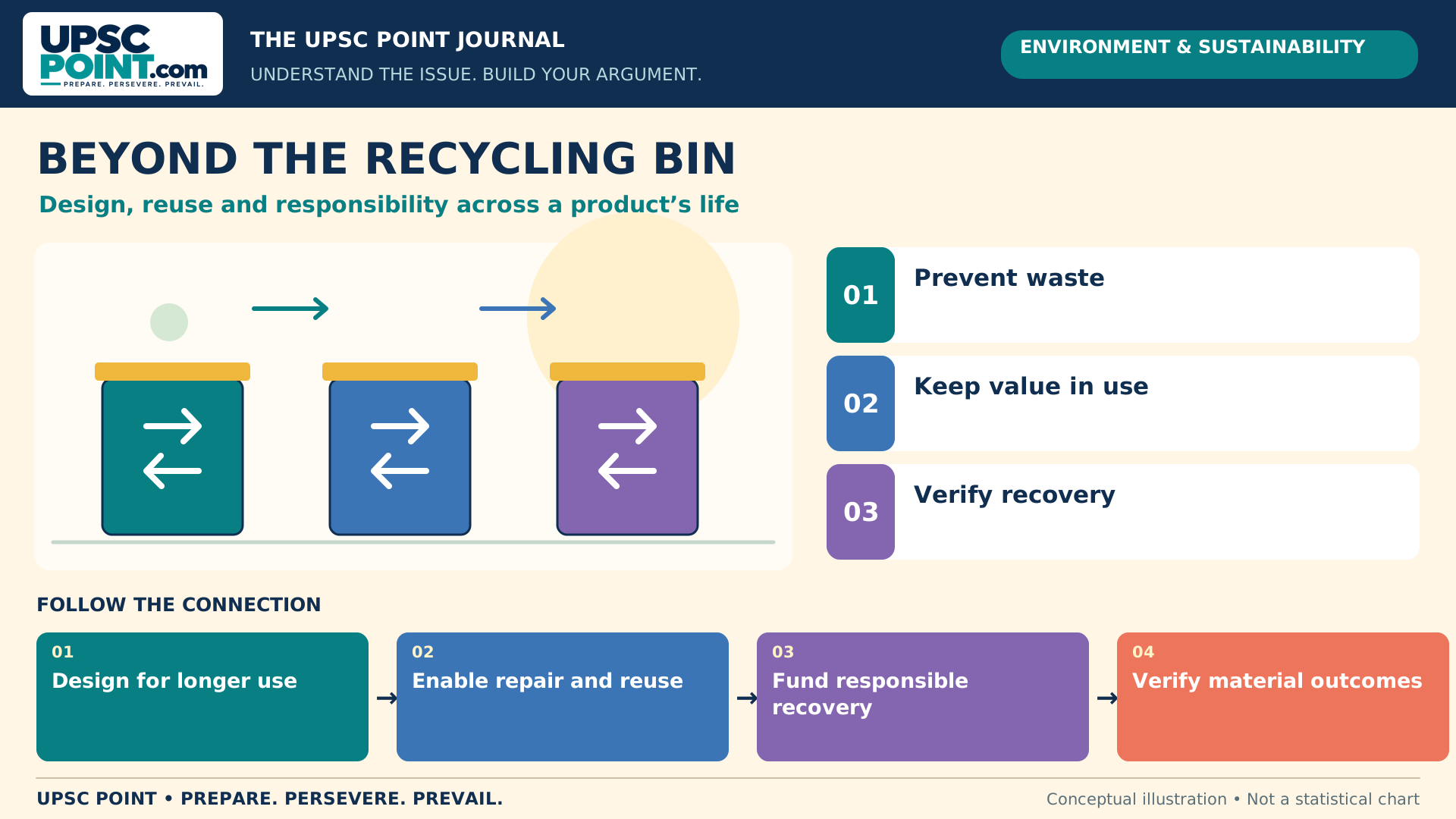
Restoration should begin with an understanding of what has been degraded and what recovery is plausible. The CBD framework includes a target for restoring degraded ecosystems.[1] The substantive task is not simply to add vegetation. Depending on the location, recovery might involve changing water flows, reducing pollution, addressing invasive species or allowing natural regeneration. The appropriate intervention depends on the ecosystem rather than a universal planting recipe.
Monitoring must therefore look beyond the first season. Survival, native diversity and the return of ecological functions may take time to assess. Projects should acknowledge uncertainty and adapt when evidence changes. There is a temptation to favour easily photographed activity over less visible protection, such as preventing recurring disturbance. Yet avoiding renewed damage may matter more than repeatedly funding fresh restoration ceremonies.
Information is necessary, but uncertainty persists
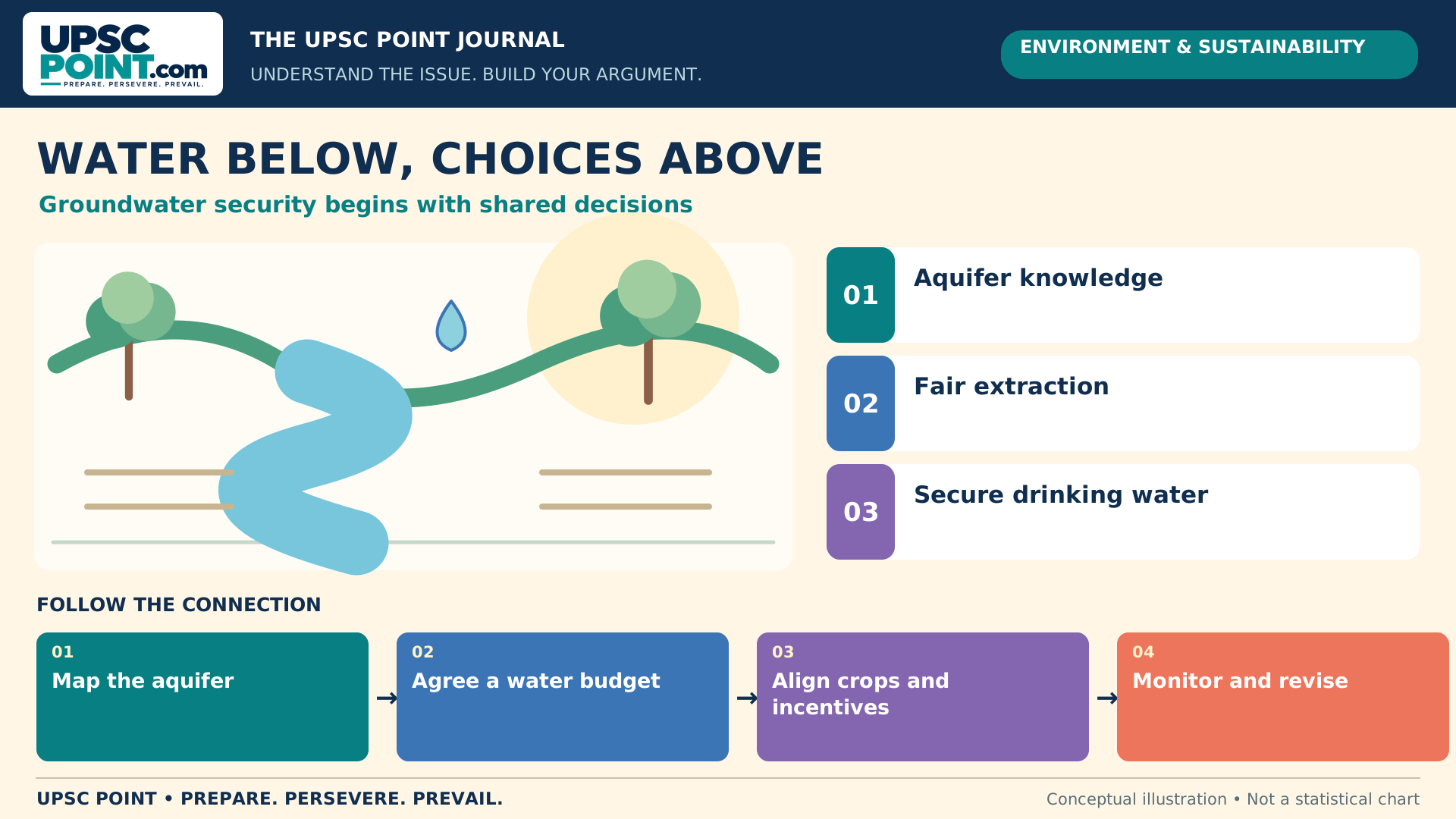
Biodiversity assessments draw on observations that are uneven across species and locations. Some organisms are easier to survey than others, and the absence of a record does not always establish absence from a landscape. Decision-making should be transparent about those limitations. Where potential harm is serious and difficult to reverse, weak information is a reason for closer scrutiny rather than automatic clearance.
Local knowledge can identify seasonal patterns, resource use and changes that a short survey misses. Scientific methods can test, compare and extend those observations. Neither should be romanticised as complete. The useful relationship is one of respectful verification and learning. Evidence should be accessible enough for affected people to question it, while technical disagreement should be explained rather than hidden behind unexplained terminology.
Build conservation into ordinary economic decisions
Biodiversity policy cannot succeed solely inside specialised departments. Roads, agriculture, urban expansion and pollution control all influence habitats. Screening alternatives early can reveal ways to meet a development objective with less damage. Once financing, alignment and land acquisition are settled, environmental review risks becoming an argument over small modifications to a decision that has already become politically difficult to reconsider.
For an examination answer, resist a false choice between livelihoods and nature. The better question is which development pathway sustains ecological functions while distributing costs fairly. Protect irreplaceable areas, improve management across working landscapes and evaluate actual outcomes. Ecosystem services help explain human dependence on biodiversity, but responsible conservation also recognises values that cannot be settled by a price tag or a single compensatory plantation.
A framework to revise this issue
- 01Identify ecological functions
- 02Assess pressures and alternatives
- 03Protect and restore fairly
- 04Track ecological outcomes
| Concept or claim | What to examine |
|---|---|
| Species richness | Counts species, not every ecological relationship |
| Ecosystem service | A benefit nature provides to people |
| Restoration | Recovery of functions, not planting alone |
A question to think through
Discuss the governance challenges involved in biodiversity conservation. Examine competing priorities and suggest a practical, equitable approach. (250 words)
Build a position, explain its mechanism, consider a counterargument and propose a workable response.
Sources & further reading
Sources provide the factual anchors. The arguments and proposed evaluation frameworks are editorial analysis; illustrative scenarios are hypothetical.
- CBD: Kunming-Montreal Global Biodiversity Framework targets ↗
- CBD: Target 3 guidance on effective conservation ↗
Found an error or a source that needs updating? Send the article title and the passage to our support team.